


Animal People Need Places to Exhale
By Katya Lidsky
Hello, animal people! You are my favorite people! Truly.
There is something extraordinary about someone who rearranges their entire day to spend time with a pup, someone who cries over a dog they met for 10 minutes, someone who spends their weekends walking shelter dogs instead of going to brunch, someone who lies awake wondering what they could have done differently in that training session.
Whether you’re a dog trainer, behavior consultant, shelter volunteer, rescue coordinator, foster, veterinary professional, transporter, or simply someone whose heart belongs to animals, you probably sense this truth: We don’t just work with animals. We work with nervous systems. We tune into nervous systems, absorb them, and are impacted by them.
Some of those nervous systems are furry. Some of them are human. But every single one influences the others in its orbit.
For years, I thought caring for animals meant focusing almost entirely on them. Learn more behavior. Better training techniques. Better enrichment. Better communication. Better handling. Now, don’t get me wrong – all of that matters. All of that is mightily important. But eventually I realized there was another variable standing quietly in every kennel, every consultation, every home, and every adoption event.
Me. My breathing. My body. My stress. My presence. My overwhelmed nervous system nearing burnout.
Animals don’t just listen to words or watch our movements. They read and interpret our nervous systems. Actually, they are masters at it. We might whisper, “You’re okay, sweetheart,” but if our shoulders are glued to our ears and our mind is replaying a heartbreaking shelter surrender or the scolding a dog received from their pet parent 20 minutes ago, the dogs feel us still aching over what we witnessed. Our energies emit what we haven’t let go of, so even though dogs don’t speak English, they do speak muscle tension. They speak breath. They speak facial expression. They speak pace, peace or lack thereof.
In sum, animals speak in energy. And whether you are aware of it or not, yours is communicating something.
One of the most surprising lessons dogs taught me
About four years ago, I became a certified breathwork facilitator. Not a sentence I ever imagined saying, but there it is. I wasn’t looking for another credential. I wasn’t trying to build a business. I simply got tired of feeling like a can on the back of a Just Married car, being dragged around through my shelter volunteering and animal welfare work. So I started breathing intentionally. I started practicing what I was learning. I started bringing those practices into shelters, as I dedicated my entire practicum to animal shelters and rescue groups. Supporting animal people through breathwork was – and has continued to be – nothing short of holy.
But it wasn’t just the humans, it was the dogs too. Before working with a dog, first, I’d deepen my exhales. Before opening a kennel door, I’d soften my face and relax my jaw. I’d sit quietly with a frightened foster dog before asking anything of them. I endeavored the art of no agenda, no fixing, just regulating my breathing, on purpose. And fascinating things started happening – or maybe they were always there, and I was just slowing down enough to notice them. Dogs that were panting began to pause. Dogs who couldn’t settle slowed their barking. Dogs who were bouncing off the walls found moments of calm.
Yes, it took some time. No, I did not suddenly obtain magical powers. But I had become a steadier nervous system. I had become someone who paid attention to the positive things, so I could then capture them, and reinforce them. I started allowing dogs to borrow my nervous system as a reminder of what home felt like now that they didn’t have one.
Regulation is something we can share with others. It may be the biggest gift of all. Because our calm becomes part of an animal’s environment and their calm can become part of ours. It’s building security, back and forth, like all good love stories go.
Self-care isn’t selfish. It’s part of animal care.
This is the part I wish more animal people took to heart: taking care of yourself isn’t abandoning the dogs, your career, your efforts, or your commitment. It isn’t choosing yourself over animals. Self-care can be one of the most generous things you can do for animals. Because a regulated human responds instead of reacts, thinks more clearly, stays more patient, and can trust their intuition and instincts with more confidence.
A regulated human creates safety. This doesn’t mean becoming perfectly Zen or never having hard days. But it may mean having somewhere to put the emotional toll and the challenges this work attracts and invites. It may mean processing and awareness. We know working with animals can be heavy. But carrying that weight into perpetuity and alone? That’s unnecessary. That can be punishing. That can drive us out. And in the end, when we leave, they pay the highest price.
We witness neglect, loss, behavioral issues, behavioral euthanasias, compassion fatigue, impossible decisions, constant urgency, poor matches, negative associations, big fears, and difficult people. Those of us who work with animals constantly hear how we should practice self-care, but rarely do we have it explained. What does it actually look like for those of us who endure a hefty dose of helplessness and injustice as a job requirement? What does it mean for us who must bear beings we adore being left behind or hurt? Where are we supposed to learn these things? How are we supposed to rewire our nervous systems to let in more balance, boundaries and bliss when we barely have time for a proper lunch that consists of more than an iced coffee?
We need spaces just for us
It’s not about bubble baths, platitudes, or thinking positive. It’s not about going woo woo or being totally scientific. It’s about being in communities filled with other people who can relate to the relentless intensity we tolerate because it means we’re helping dogs. It’s about places where animal people don’t have to explain why we feel the way we do, why we don’t have to justify all the layers or make sense of the complexity this work brings.
Inside these communities, I envision that we can process grief and learn how stress lives in the body when unexpressed. I picture us normalizing a reconnection with the values and the reasons that brought us to this work before burnout convinced us we might have to change careers or hobbies because we’re not making a difference anyway. I see us braving tiny, intentional celebrations together, the kind most people would never understand but we do: That first tail wag. The scared dog who finally took a treat. The foster dog who slept through the night. The adopter who sent an update six months later. The family we helped stay together. These moments count! These are our measures of success! These moments fill us up!
And what would it be like to give those victories adequate room? What would the animal welfare world feel like if play was natural for us, if we gave ourselves opportunities to be creative, if we practiced letting pleasure in, if we resisted the urge to feel guilty about having fun in the wake of so much suffering, or slowing down when everywhere we turn is more pressure to hustle.
No, we need to laugh. We also need enrichment. We need to collaborate and help one another and shine bright in the vibe we are. Because healing isn’t only crying. It’s also giggling with people who get why your camera roll is 98% dogs, and it is a sense of belonging that is so accessible and available, it combats aloneness with the only thing that can eclipse it: joy.
You don’t have to earn support
One of the biggest misconceptions animal people might believe either consciously or not is that everyone else deserves care first. The dogs, cats, wildlife, clients, adopters, the rescue, the shelter system at large. Then at the end of the list, maybe it’s us.
After years in shelters, fostering seniors, dog training, studying grief, facilitating breathwork, and talking with hundreds of animal lovers, I know this: You don’t have to fall apart before you’re allowed to receive support. You don’t have to hit burnout. You can prevent it. Support works best before a crisis. It’s a lifestyle, just like good dog training! It’s incremental shifts and mindful inclusion of yourself, quick tools and little adjustments, this is what moves the needle. If it true for dogs, it’s true for people too.
So whether you’re a volunteer wanting to stay in this work longer…
A dog trainer hoping to show up more grounded to your clients…
A behavior consultant carrying loads of difficult cases and hoping not to snap or bury yourself in a blanket of defeat…
A shelter employee trying to make it through another overwhelming, nonstop week…
Or a rescuer who has forgotten what it feels like to rest…
I hope you find or design a community that offers you a soft landing. Not because we’ll eliminate the hard parts. We won’t. Animals will still need us. But so you have people beside you and discover tips that actually help you sustain this work. Feeling is not failing. Experiences of self-care don’t have to become more to-do’s on your list. Permission to care for the human caring for the animals ripples out beyond you, it permits others to care for themselves and it provides animals with the rich essence of you, which I believe is what helps them most. It can elevate an environment and become a movement.
I genuinely believe one of the next frontiers in animal welfare isn’t better training methods or better enrichment—though both are tremendously valuable – it’s healthier humans. Humans who are aligned with hope and who understand that their own nervous system is part of every interaction we have with an animal, four-legged or two-legged. When we become steadier, animals can settle faster and relationships can grow, communication can improve and we can stay in this work for the long run, knowing we’re on the same team.
This is why I’m grateful to be part of a team with APDT who has a robust community, offering continued education, increased wellbeing, and a sense of togetherness. Because how we do what we do matters as much as what we do. Maybe, just maybe, this is how we will slowly change the culture for animals—not by asking anyone to care less or anyone to care more or anyone else to do it for us, but by teaching the system itself how to care for our enormous hearts. That way, we won’t break under the weight of how much we care.
You are important. Your heart in its wholeness is an asset for dogs, and also for all of us. Thank you for sharing it here with me.
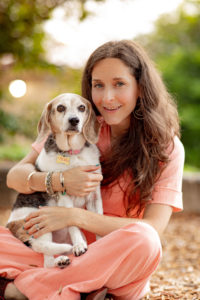
Katya Lidsky is the Founder of The Thriving Volunteer, an online membership community designed to provide animal shelter and rescue volunteers with support, connection and resources so they can stay in this work. She also offers workshops specifically designed to support shelter staff. Katya is a certified, trauma-informed Breathwork Facilitator and Creative Grief Coach, has worked in the animal welfare nonprofit space for over a decade, and is herself a long time animal shelter volunteer, foster, and advocate. Katya’s book, Be Your Dog’s Best Friend: The Benefits of Mutual Bonding and Relationship Building was published by McFarland (2025) as part of their Dogs In Our World series. You can follow her @KatyaLidsky on Instagram.